Hidden Water Damage Signs in Stonegate: Early Detection
The worst water damage calls Stonegate Water Restoration answers in Stonegate rarely start with a dramatic flood. They start with a homeowner standing in a hallway, sniffing the air, asking their spouse if they smell that too. By the time most Stonegate families pick up the phone, the leak has been working behind the drywall or under the subfloor for weeks, sometimes months. That is the cruel math of hidden water damage. A pinhole in a copper supply line can release less than a cup of water a day and still rot a wall cavity before you ever see a stain. A slow drip behind a dishwasher can saturate a subfloor through an entire Indiana winter while your floors look fine from above.
Aaron founded Stonegate Water Restoration in 2018 because too many central Indiana homeowners were getting hit with mold remediation bills that could have been avoided if someone had taken their early concerns seriously. We are IICRC certified, BBB A+ accredited, and our crews respond across Stonegate in most cases within 2 hours of your call. This guide walks you through the quiet signals your house is already sending you, what they usually mean, and when a hidden leak crosses the line from a plumber visit into a full restoration job. If we inspect your property and find nothing serious, we will tell you directly.
The Quiet Signals Your House Is Already Sending
Hidden water damage almost never announces itself with a puddle. It announces itself with smell first. Walk into a room you have not used in a few days, especially a finished basement, a guest bathroom, or a spare bedroom over a crawl space, and pay attention to the first three seconds. A musty, slightly sweet, earthy smell is the byproduct of microbial growth feeding on cellulose, which is the paper backing on drywall and the wood fibers in your framing. That smell typically appears between 48 and 72 hours after materials get wet, which lines up with what the IICRC calls the mold growth window. If you can smell it from the doorway, the moisture content behind that wall is almost certainly above 16 percent, well past what wood and drywall can tolerate long term. Our 48 hour mold rule article explains the biology behind that timeline in more detail.
The second signal is visual, but subtle. Look at your ceilings and walls in raking light, meaning light that hits the surface at an angle, like late afternoon sun through a window. You are looking for faint discoloration, a tea colored halo, a slightly bowed section of drywall, or paint that has lost its uniform sheen. On ceilings under bathrooms, a circle of slightly darker paint that feels cool to the touch is a near guarantee of an active leak in the wax ring or shower pan above. On walls, watch for nail pops that have appeared suddenly. Drywall expands and contracts as it absorbs moisture, and that movement pushes fasteners out of the studs. Stonegate homes built on slab foundations are especially prone to baseboard staining from slab leaks, which is why we keep a dedicated page on slab leak detection for homeowners doing their own diagnostic walk through.
There is a third signal that homeowners often dismiss as imagination, and that is a change in how a room feels. A space that suddenly feels heavier, more humid, or noticeably cooler than the rest of the house is reacting to evaporation from a wet surface you cannot see. Standing water inside a wall cavity or under a vanity will pull heat from the surrounding air as it evaporates, and a sensitive thermostat or a hygrometer placed in that room for 24 hours will often confirm the difference. We have seen relative humidity readings in affected rooms run 12 to 18 points higher than neighboring spaces, which is a strong enough delta to fog a cool window or curl the edges of a paper book left on a shelf.
When to Stop Guessing and Call Someone
If you have read this far, something in your house has already caught your attention. Trust that instinct. Hidden water damage is one of the few home problems where waiting another week genuinely makes the bill larger, the repair longer, and the insurance conversation harder. Stonegate Water Restoration offers free inspections across Stonegate and central Indiana, our crews are IICRC certified, and we respond in most cases within 2 hours when the situation is active. Call us, send a few photos, or schedule a walk through. If we look at your property and find nothing that warrants restoration work, we will tell you directly and you can sleep easier tonight.
The Sounds, Floors, and Bills That Give It Away
Your water meter is the most honest witness in your house. Turn off every fixture and appliance that uses water, then watch the small dial or digital flow indicator for three minutes. If it moves at all, water is leaving the system somewhere, and in a sealed home that water is going into a wall, a slab, or the ground under your foundation. A monthly water bill that has climbed 15 to 40 percent without a change in household habits is another quiet alarm. We have walked into Stonegate homes where the homeowner had been paying an extra 60 dollars a month for nearly a year while a supply line under the kitchen sink slowly fed the cabinet base and subfloor below.
Sound matters too, and the best time to listen is late at night when the house is quiet. Press your ear gently against drywall near plumbing walls, or hold a long screwdriver against a copper line and your ear against the handle. A faint hissing, ticking, or trickling sound where there should be silence almost always means a pinhole leak or a slow drip inside the cavity. Toilets that cycle on their own every 20 to 40 minutes are flagging a failing flapper or fill valve, and that wasted water can total thousands of gallons a month before it ever shows on a floor.
Floors tell the truth too, if you know what to feel for. Hardwood that has developed a slight cupping pattern, where the edges of each plank sit higher than the center, is reacting to moisture from below. Tile that suddenly has a hollow sound when you tap it, or grout lines that are darkening in only one section of a room, often points to a failed shower pan or a supply line under the slab. Carpet that feels cooler in one specific spot, even when the rest of the room is at room temperature, is usually sitting on a wet pad. Subfloor moisture is one of the most underdiagnosed issues we see, and we have a full breakdown of how we test for it in our piece on subfloor water damage detection.
Building a Habit of Looking
The homeowners who avoid the worst outcomes are not the ones with the newest plumbing or the most expensive leak detectors. They are the ones who walk their basement once a month with a flashlight, who feel the cabinet floor under every sink twice a year, and who notice when the laundry room smells different than it did last week. Twenty minutes of attention per month is the cheapest insurance policy a Stonegate homeowner can buy, and it is the difference between a phone call to Stonegate Water Restoration that ends with a small dry out and one that ends with a six figure rebuild.
What Early Detection Actually Saves You
Catching a hidden leak in the first week, versus the first six months, is the difference between a 500 to 1,500 dollar dry out and a 6,000 to 18,000 dollar reconstruction project. Insurance carriers in Indiana treat these claims very differently as well. A sudden and accidental leak that is reported promptly is generally covered under a standard homeowner policy. The same leak, left to run for months and documented as long term seepage, is almost always denied as a maintenance issue. That single distinction has cost Stonegate homeowners tens of thousands of dollars, which is why we recommend calling for an inspection the moment your gut tells you something is off, not after you have spent a weekend trying to confirm it yourself.
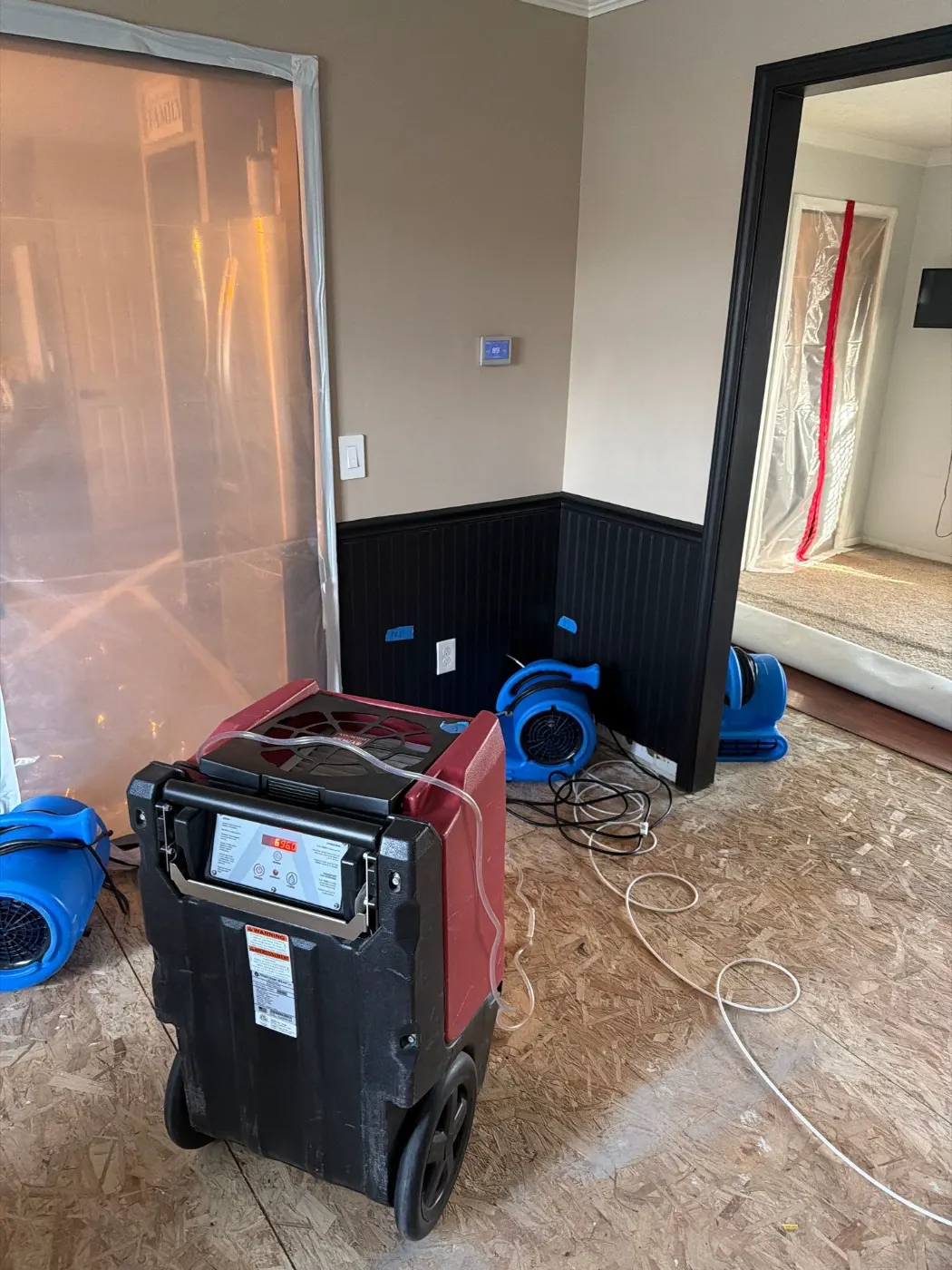
When Stonegate Water Restoration arrives at a Stonegate property for a hidden damage inspection, typically within 2 hours of your call, we bring thermal imaging cameras, pin and pinless moisture meters, and borescopes that let us look inside wall cavities through a hole the size of a pencil eraser. We map the moisture footprint, identify the source, and give you a written scope before any demolition happens. If the issue turns out to be a simple plumbing fix with no structural saturation, we tell you to call a plumber and we charge nothing for the visit. If the moisture readings show category 1 clean water inside the wall cavity, we can usually dry it in place with targeted air movers and dehumidifiers over three to five days. If readings show category 2 grey water or active microbial growth, we move into a containment and remediation scope, and we walk you through the insurance documentation step by step.
Frequently Asked Questions
How can I tell if water damage is hidden behind my walls?
The most reliable signs are musty smells, cold spots, peeling paint near baseboards, and unexplained spikes in your water bill. In Stonegate homes, Stonegate Water Restoration uses thermal imaging and pin moisture meters to confirm what is happening inside wall cavities without unnecessary demolition.
Will my homeowners insurance cover hidden water damage in Stonegate?
It depends on the source and how long the leak has been active. Sudden and accidental losses are usually covered, while long-term seepage and neglect are typically excluded. Stonegate Water Restoration documents moisture readings and timelines that support legitimate claims and helps you understand what your policy will likely accept.
How fast can Stonegate Water Restoration respond to a suspected hidden leak?
For emergency calls in Stonegate and surrounding central Indiana communities, we dispatch a certified technician in most cases within 2 hours. Free inspections for non-emergency situations are typically scheduled within 24 to 48 hours.
What does a hidden water damage inspection cost?
Stonegate Water Restoration offers free moisture inspections for Stonegate homeowners. You receive a written assessment with thermal images, moisture readings, and a clear scope of work, with no obligation to move forward.
Is mold always present with hidden water damage?
Not always, but the risk rises sharply after 48 to 72 hours of sustained moisture. If your leak has been active for more than a few days, plan on air quality testing and possible remediation in addition to drying.
Have a restoration question?
Our IICRC certified Stonegate crew is ready to help. Free assessments, estimate based on what we can sees, no pressure.